 (08) 9278 2575
How CCTV Is Used in Perth Criminal Cases
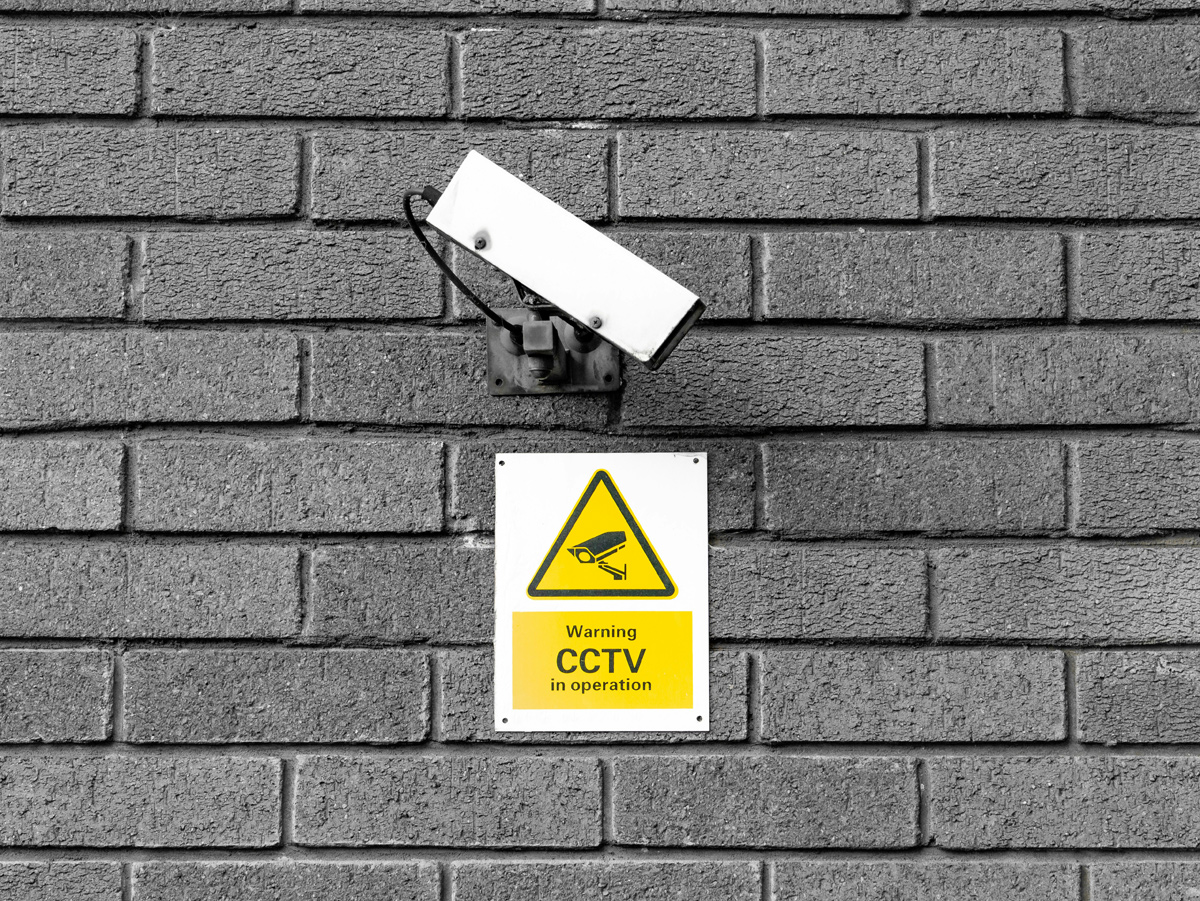
CCTV footage can often provide key evidence in criminal prosecutions in Perth, whether as proof of nightlife assaults, theft from retail stores or more serious criminal offences. However, CCTV footage evidence must meet the standards of the rules of evidence before it can be admitted in a criminal trial.
The following outlines what Western Australian law says about gathering CCTV video evidence and admitting it into evidence of a criminal prosecution.
Video Evidence In Criminal Cases
CCTV footage falls within the broader category of ‘video evidence’, including conventional security footage from a fixed camera, but also body-worn camera footage, dashcam recordings, mobile phone videos, doorbell cameras, transport surveillance, casino and venue footage and ATM recordings.
This evidence is often tendered by either the prosecution or the defence for a judge and/or a jury to assist in their fact-finding.
WA Police may obtain CCTV in several ways. In straightforward matters, a business or householder may voluntarily provide footage. In more serious matters, police may seize recording devices, obtain warrants or use statutory powers to preserve evidence.
Section 146 of the Criminal Investigation Act 2006 (WA) provides that WA Police can seize a “thing relevant to an offence” as part of a search even without a person’s consent. This includes a thing that may afford evidence relevant to proving the commission of an alleged offence, evidence relevant to who committed the alleged offence or evidence that tends to rebut an alibi.
Importantly, just because footage has been lawfully seized, does not mean it is admissible at trial.
General Admissibility of CCTV Footage
For the prosecution to admit CCTV footage into evidence, it needs to comply with the rules of evidence which are a combination of common law principles and legislation (at the time of writing, the Evidence Act 1906).
The question to be answered is whether the evidence is ‘relevant’ to the proceedings. CCTV footage will only be relevant if it can help prove or disprove a fact in issue. For example, footage showing a person entering a building shortly before a burglary or footage capturing an alleged assault. If CCTV footage isn’t relevant to a fact in issue, it will generally be inadmissible.
If relevant, the CCTV footage may still be inadmissible if it was unlawfully or improperly obtained. In a CCTV case, this may arise where police or another person unlawfully obtained recordings from a private setting, exceeded the scope of a warrant or failed to comply with the rules regarding surveillance devices.
The Surveillance Devices Act 1998 (WA)
The Surveillance Devices Act 1998 (WA) regulates the use of listening or optical surveillance devices in WA. Section 5 of the Act prohibits, subject to exceptions, the use, installation or maintenance of a listening device to record, monitor or listen to a private conversation, including a private conversation to which the person is a party. Further, section 6 of the Act prohibits, subject to exceptions, the use, installation or maintenance of an optical surveillance device to observe or visually record a private activity. A “private activity” is defined as an activity carried on in circumstances that may reasonably be taken to indicate that the parties desire it to be observed only by themselves. Such as conversations or activities occurring within a private residence, hotel room, change room or other secluded setting where participants would ordinarily expect privacy.
Further reading: Can you record someone without permission?
If footage is obtained unlawfully, it is not automatically excluded in every criminal case. The court may still need to consider the common law discretion to exclude improperly or illegally obtained evidence. Bunning v Cross [1978] HCA 22 is the leading Australian authority on improperly obtained evidence. The case concerned unlawfully obtained breath test evidence, in which The High Court held that unlawfully obtained evidence is not automatically inadmissible, but the court has a discretion to exclude it on public policy grounds. The court must therefore balance the public interest in bringing offenders to justice against the public interest in discouraging unlawful conduct by authorities and protecting individual rights.
Being Identified From CCTV Footage
One of the most common uses of CCTV footage in criminal trials is as “identification evidence” to try and say the accused person is/or isn’t the person in the footage.
The High Court’s decision in Smith v The Queen [2001] HCA 50 is central to determining the admissibility of identification evidence. In that case, police officers attempted to give testimony identifying the accused from bank security camera images. The High Court held that where the police officers were in no better position than the jury to compare the accused with the images, their evidence did not rationally assist the jury.
In practice, this means that the identification of an accused in CCTV should largely be left to the jury in WA criminal matters.
However, a jury must be warned about the limitations of trying to identify someone from footage. The High Court decision of Domican v The Queen [1992] HCA 13 established that a jury should be warned about specific witnesses of any identification evidence being led by a prosecution.
It requires a cogent and effective warning where identification evidence is a significant part of the prosecution case and reliability is disputed. A general warning is not enough. The jury should be directed to the specific weaknesses in the identification evidence. In CCTV cases, those weaknesses may include:
- poor lighting
- short duration
- distance from the camera
- low resolution
- obstructed view
- similar clothing
- inaccurate time stamps
- lack of facial detail
- police suggestion or confirmation bias
In more limited circumstances, experts may be called by the prosecution to ‘assist’ in the identification of the accused. This could include experts in video enhancement, vehicle identification or so-called ‘body mapping’ and ‘gait analysis’ expertise.
Any expert evidence purporting to assist a jury should be heavily scrutinised by the defence in order to challenge:
- the expert’s qualifications;
- the methodology used; and
- whether the method has known error rates
If the expert opinion purported to be admitted is not based on recognised specialised knowledge or goes beyond what can be inferred from the evidence, it may not be admissible.
Contact A Criminal Defence Lawyer
Where CCTV is part of a prosecution, early legal advice is crucial to ensure you put your best defence forward.
If you are currently facing a criminal matter in Western Australia, you should seek guidance immediately from an experienced criminal defence lawyer. Andrew Williams is a highly skilled Criminal Lawyer and Barrister who can provide expert advice, protect your rights, and help achieve the best possible outcome for your case.
Call Now: (08) 9278 2575
PLEASE NOTE: The material in this blog post is for informational use only and should not be construed as legal advice. For answers to your questions regarding this or other topics, please contact a professional legal representative.
