 (08) 9278 2575
Can You Be Charged For Violating the Social Media Ban for Teens?
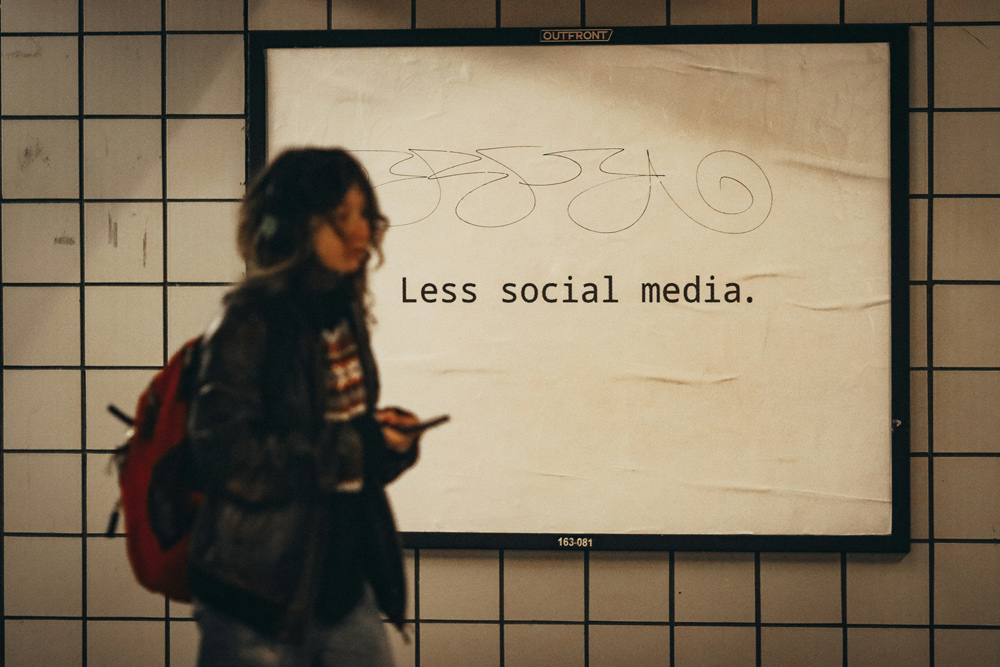
As of the 10th of December 2025, Australia has imposed a minimum age of 16 years old for the use of social media. This change has caused much confusion amongst teens and parents, with particular concerns that subverting the social media ban could result in a criminal offence.
The following outlines what the social media ban is, where legal consequences actually sit and the potential offences that could apply for getting around age verification procedures on common social media sites.
What Is The Social Media Ban?
A brainchild of the Albanese government, the Federal social media ban was introduced as a response to growing concerns about the impact of online platforms on children’s mental health and exposure to harmful content.
Despite sometimes being described in the language of the criminal law, the social media ban is primarily a change in the regulation of social media platforms, not the imposition of criminal penalties.
The reform introduced a number of changes to the Online Safety Act 2021 (Cth), including a ‘minimum age obligation’ under Part 4A of the Act requiring social media platforms to take “reasonable steps” to prevent Australians under 16 years old from having an account. Certain civil penalties (or ‘fines’) apply to social media platforms that do not comply with this requirement. These penalties currently sit at 150,000 penalty units or $49.5 million should a social media platform fail to comply with the scheme.
Not all social media platforms are bound by the new scheme. The chief regulator of online content, the eSafety Commissioner, has identified many mainstream platforms as bound by the scheme including Facebook, Instagram, TikTok, YouTube, X, Reddit and Twitch. However, other social media platforms are not included and currently do not carry minimum age requirements; these include Discord, WhatsApp, Roblox, Steam, Google Classroom and YouTube Kids.
Importantly, this change did not provide any penalties for children under 16 years old using a social media platform contrary to the ban, nor do criminal penalties apply to parents or caregivers for allowing children to use restricted platforms.
Potential Offence For Lying to Social Media Platforms About Age
Whilst the social media ban does not, on its own, impose criminal penalties for children under 16 years old using platforms contrary to the law, how individuals subvert age verification could amount to a criminal offence.
Following the change, each social media platform is obligated to implement its own means to verify age. This could include requiring users to provide identity documents, submit to facial age scanning or the utilisation of third-party age verification software. If a person, whether a child or parent, fabricates information in order to gain access to age-restricted services, this could fall foul of the criminal law.
If a child under 16 years old accesses a social media service using another person’s account without their permission or by bypassing age verification using deception (such as holding up a photo to pass age scanning software) this could amount to the offence of “unauthorised access to, or modification of, restricted data” under section 478.1 of the Criminal Code Act 1995 (Cth).
This offence is designed to capture common forms of “hacking” including exploiting security vulnerabilities and password theft, although it could also include deceptive acts to pass age verification checks. This offence carries a maximum penalty of 2 years imprisonment.
Whilst theoretically possible, in practice it seems unlikely that most instances of children (or their parents) misrepresenting the age of users to social media platforms would constitute an offence. This is because the courts have generally drawn a distinction between breaching a platform’s terms of service and accessing data without authorisation in the criminal sense. As a result, ordinary age misrepresentation may be better characterised as a contractual or regulatory issue for platforms to manage, as opposed to a criminal offence.
It’s important also to note that any criminal liability for children who subvert age verification requirements will depend greatly on whether they are the minimum age of criminal liability. Generally, only a child above the age of 10 years old can be prosecuted for a crime. Further, the common law principle of doli incapax states that a child aged 10 to under 14 years is presumed to be incapable of forming criminal intent. The prosecution must rebut this presumption by proving beyond reasonable doubt that the child understood that their conduct was seriously wrong, not merely naughty or mischievous, at the time of the offence. If the presumption is not rebutted, the child cannot be held criminally responsible.
A Matter of Free Speech?
Although largely not constituting a criminal matter, there are serious concerns that the social media ban may be infringing on the fundamental freedoms of young people to express themselves.
While Australia does not have a constitutional right to free speech in the American sense, the High Court has recognised an implied freedom of political communication. Importantly, that freedom is not confined to adults. Children and young people are capable of engaging in political discussion, much of which now takes place online. Curtailing access to mainstream social media platforms necessarily arguably limits the ability of children under the age of 16 to participate in political discourse in contemporary forms.
Further, legal commentators and human rights bodies have questioned whether a blanket age-based restriction is proportionate to its stated aim. The Australian Human Rights Commission has previously noted that the Convention on the Rights of the Child emphasises both protection from harm and the child’s right to access information and express views. From that perspective, education, supervision and enforceable duties of care on platforms may represent a less restrictive response than prohibition.
The High Court of Australia has recently agreed to hear a constitutional challenge brought by two 15-year-old teenagers against the social media ban. The Court will hear a special case, likely in February 2026, to determine the validity of the laws.
The Importance of Obtaining Legal Advice
The introduction of Australia’s social media ban has created uncertainty for young people, parents, and families about where responsibility lies and when online behaviour might cross into criminal territory. While most cases involving age misrepresentation are unlikely to result in criminal charges, situations involving alleged unauthorised access, deception, or police involvement can quickly become serious.
If you or your child are being investigated, questioned, or charged in relation to online activity, it is essential to obtain clear and accurate legal advice as early as possible. The application of Commonwealth criminal laws, youth justice principles, and defences such as doli incapax can be complex and highly fact-specific.
Andrew Williams is a highly experienced Perth Criminal Lawyer and Barrister who regularly advises on technology-related offences and criminal law matters in Western Australia. He can provide practical guidance, protect your rights, and ensure any interaction with police or authorities is handled appropriately.
Call Now: (08) 9278 2575
PLEASE NOTE: The material in this blog post is for informational use only and should not be construed as legal advice. For answers to your questions regarding this or other topics, please contact a professional legal representative.
